What's actually happening
Your texts are almost certainly being filtered by the carriers — AT&T, T-Mobile, Verizon — because the number you're sending from isn't registered as a business sender. Since US carriers finished rolling out a registration system called A2P 10DLC, business texts from unregistered local numbers get treated as suspected spam and quietly dropped.
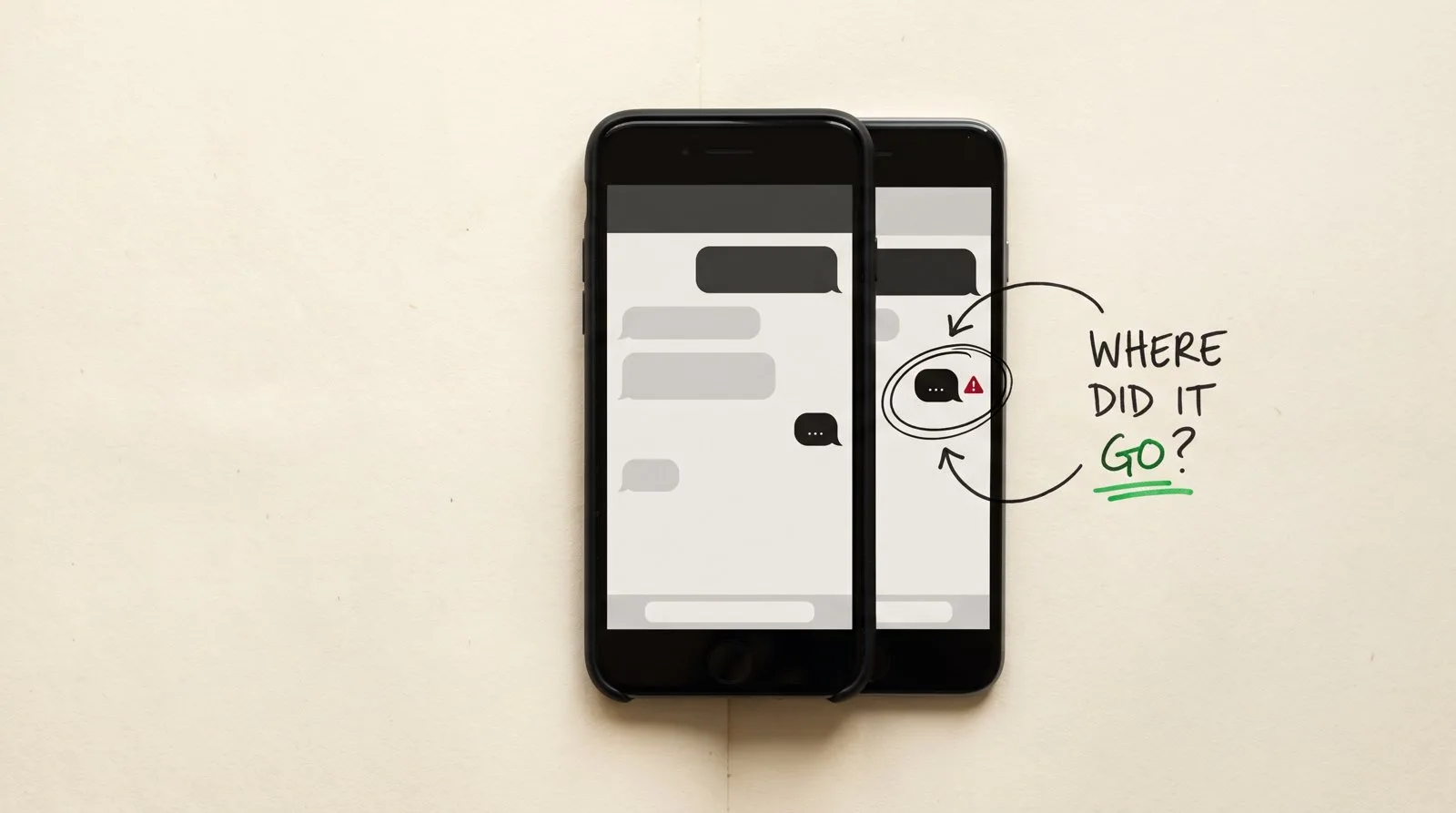
The cruel part is the silence. Your texting software may show the message as sent. Your customer never gets it. Nobody emails you to say your traffic is being filtered. Most owners discover the problem the way you probably did: a customer says "I never got your text," you test it on your own phone, and it doesn't arrive — or arrives sometimes, from some carriers, which is somehow more maddening.
If that's where you are, this guide walks through why it happens, how to confirm it, and what actually fixes it. (Spoiler: the fix is registration done correctly — the same work behind our A2P 10DLC registration service.)
Carrier filtering: why there's no error message
Carriers filter suspected spam silently on purpose — if spammers got a clear "blocked" signal, they'd simply adjust and resend. That design decision means legitimate small businesses get caught in the same net with the same lack of feedback.
Depending on your texting platform, a filtered message can show up as "sent," "delivered," or "undelivered" with a cryptic error code. Platforms like Twilio surface carrier-filtering errors on their side (error 30034, for example, relates to sending from a number that isn't properly registered), but many small-business texting tools bury or never show these codes. So the symptom you actually observe is softer: reply rates fall off a cliff, confirmations stop landing, some customers get texts and others don't.
One pattern worth knowing: filtering often isn't all-or-nothing. Unregistered traffic may trickle through at low volume, then get throttled or blocked as volume grows — which is why texting "worked fine" when you started and broke as your business grew.
The A2P 10DLC reality
A2P 10DLC stands for "Application-to-Person, 10-Digit Long Code," and it is now the mandatory registration system for any business texting customers from a regular US local number. It's run through an industry clearinghouse called The Campaign Registry (TCR), and every major texting provider — Twilio, and the platforms built on top of it — requires it.
Registration has two parts:
- Brand registration — who you are. Your legal business name, EIN, and address, filed so they match your IRS records.
- Campaign registration — what you send. Your messaging use case, sample messages, and — the part that sinks most applications — proof of how customers consent to receive your texts.
Once both are approved, carriers deliver your messages as known business traffic instead of filtering them as suspected spam. Until then, you're the anonymous number the filters exist to catch. There's no way around this for local numbers; toll-free numbers and short codes have their own separate registration paths, but "just don't register" is no longer one of the options.
If you want the full walk-through of what registration involves, we've written a complete A2P 10DLC registration checklist.
Other reasons business texts don't deliver
Registration is the most common culprit, but a fair diagnosis rules out the others first. Here are the remaining causes we check, roughly in order of likelihood:
- A rejected or stalled campaign. You (or your platform) started A2P registration, but the campaign was rejected and nobody followed up. Rejected is functionally the same as unregistered — carriers keep filtering. We wrote a separate guide on why A2P campaigns get rejected and how to fix each reason.
- The number isn't attached to the approved campaign. Registration is per-number-pool: an approved campaign only covers numbers actually linked to it. Adding a second number without linking it recreates the whole problem.
- Content-based filtering. Even registered senders get individual messages blocked for spam-pattern content: public link shorteners, ALL-CAPS urgency, or messages that don't match the use case the campaign registered.
- Recipients who opted out. Replying STOP is honored at the carrier and platform level; later messages to that person silently fail.
- Landlines and invalid numbers. A surprising share of "texts not delivering" tickets turn out to be landline numbers in the contact list — they can't receive SMS at all.
How to find out which problem you have
Start by asking your texting provider one question: what is my A2P 10DLC campaign status? Every legitimate platform can answer it — the statuses that matter are roughly "no registration on file," "in progress / under review," "rejected," and "verified."
The status maps directly to your problem:
- No registration on file: this is your answer. Your traffic is unregistered and carriers are filtering it.
- In review: filing is done, carriers are reviewing — typically days to a few weeks, longer in regulated industries. Messages sent before approval may still be filtered or held.
- Rejected: your registration attempt failed, usually with a vague reason code. Until it's fixed and resubmitted, you're treated as unregistered.
- Verified: registration isn't your problem — look at content filtering, number linkage, opt-outs, or list quality instead.
If you can't get a straight answer from your platform about your campaign status, that itself is a finding. It usually means texting was set up on a shared or unmanaged number, and nobody owns the registration. Moving to a business phone line you actually own — with the registration filed under your business — is usually the cleanest way out of that trap.
The fixes that work — and the "fixes" that make it worse
The only durable fix is registering correctly: a brand filed to match your legal records, a campaign that describes your real use case, and a consent flow a carrier reviewer can verify on your website. That's honest, boring plumbing — and once it's approved, delivery stops being a mystery. It's also the foundation everything else texting-related stands on: an AI receptionist that texts back missed callers is only as good as the delivery underneath it.
Two popular workarounds actively damage you:
- Rotating to a new number when delivery drops. Filters key on unregistered traffic patterns, not just numbers — and burning through numbers looks exactly like what spammers do. It can get your traffic flagged harder.
- Blasting more texts to "get through." Higher volume from an unregistered number raises your spam score. The customers who did receive you now receive you three times.
Doing the registration yourself is genuinely possible — the checklist guide is the full map. The honest caveat: the consent-flow requirements are picky, the rejection codes are cryptic, and regulated industries get extra scrutiny. We've taken a client in one of the most scrutinized verticals there is — a California mortgage brokerage — through the full gauntlet to a verified campaign, and kept a playbook of every rejection along the way. If you'd rather hand it off, that's exactly what our A2P registration and setup service is. And if you're not sure texting is even your biggest leak, the $75 audit looks at your whole lead flow and tells you where the real problem is.